

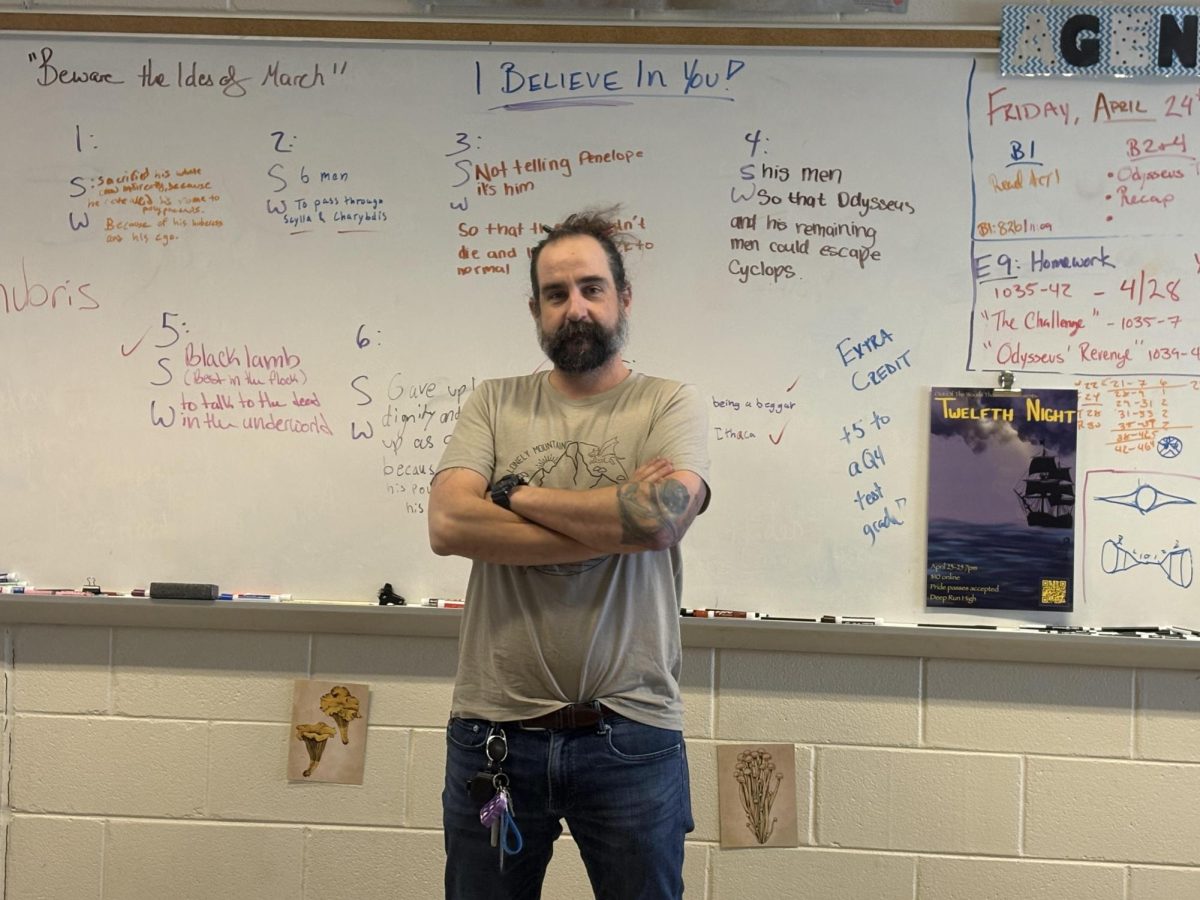
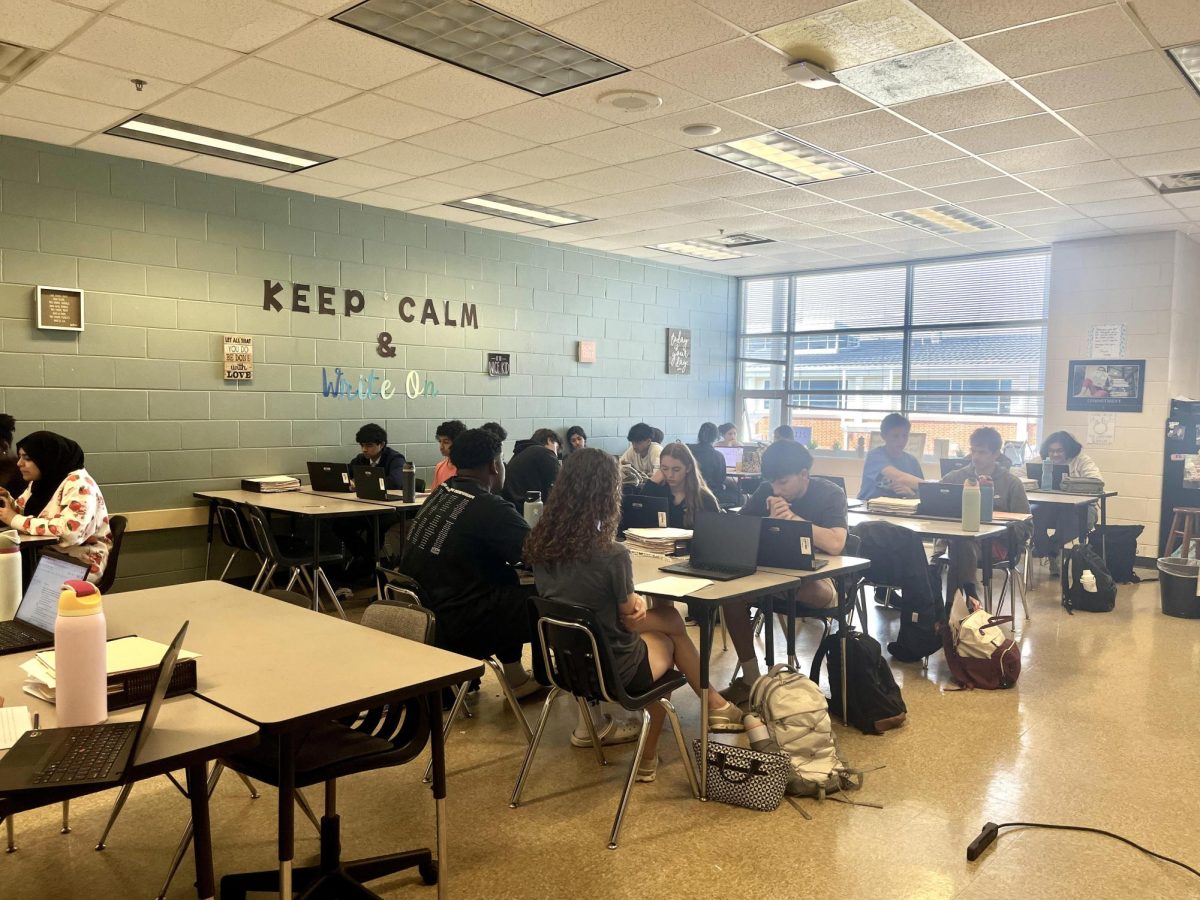
If you search mrfrittsdrhs on Instagram, you should expect a page full of fun posts depicting students from his AP European History class. From lively skits reenacting historical events to creative group projects that blend humor with history, Curt Fritts’ classroom is anything but ordinary.
In a subject that is often seen as dense and demanding, Fritts has earned a reputation for injecting joy into the curriculum, making complex topics like absolutism and constitutionalism feel accessible and exciting. But does this approach actually work?
“As long as they’re balanced, right? Like, I want to have students excited, and I want them to be oriented toward each other just as much as I want them oriented toward me. And striking that balance. It’s really important. But when we do, magical things happen, Fritts said.
This balance is key in AP Euro, where the workload can be intense. But Fritts sees peer interaction as a powerful tool for learning.
By channeling his inner student, he designs these activities to help the young-minded stay focused.
“I try to think about what I would want to do if I were a student. I try to think about how people like being silly. We want to be around our friends a lot more. And so any chance to be able to do that, but still as a teacher, I have to kind of keep them focused on the main thing,” Fritts said. Beyond academics, Fritts is mindful of the broader impact he has on his students’ well-being.
Fritts has observed shifts in classroom dynamics.
“We just finished Q1, and I think that quarter one is always really important about just earning students’ trust,” Fritts said. “We talk a lot about trusting the process in Euro because it is easy to get discouraged at the beginning, but what I always love is that the student that you are in August is just not the same student that you were in May.”
This trust-building leads to higher participation that evolves over the school year. One specific example highlights how Fritts transforms “boring” units.
“One of the things that we did recently, we did five skits, and yet I required the students to incorporate the vocabulary that we needed to make sure that we knew and use the right verbiage, but then they put it in dialogue,” Fritts said.
“It was one of those things everybody liked in the room. I knew that everybody was learning. I could say with a straight face that everybody was learning from each other and that they knew these terms generally pretty well and that they were all kind of having fun with each other,” Fritts said.
Ultimately, Fritts believes this is important for kids, even if it’s different learning styles than the generation below.
“There’s a lot of talk from, especially like, Gen Xers, like myself, you know, those from the 70s and early 80s that say that we’ve gotten soft. And I think some of that’s way overblown, and it doesn’t give enough credit to the younger generations, who I think do a lot of things better than our generation,” Fritts said.
In an era of distractions, Mr. Fritts reminds us that education thrives when it’s both challenging and cheerful. Scrolling through his Instagram, it’s clear Fritts isn’t just teaching history, he’s making it through these activities. His students emerge not only prepared for the AP exam but also with a love for learning that lasts.

Mr. Fritts • Jan 13, 2026 at 10:24 pm
Thanks Aina. Your check is in the mail! 😉