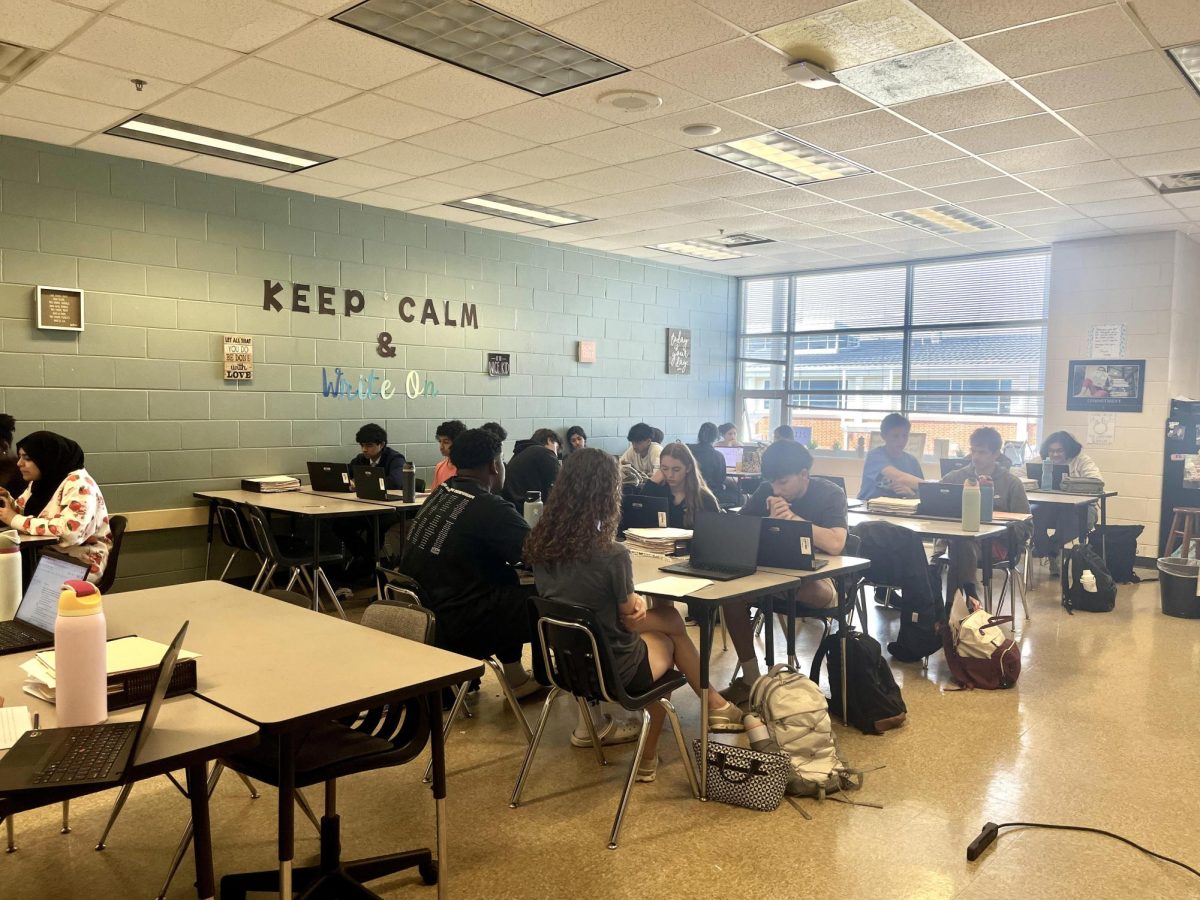
AP Research is a college-level course that enables students to design, conduct, and present an original research project on a topic of their choice, developing critical thinking, problem-solving, and academic writing skills. It is part of the AP Capstone program and requires students to first take AP Seminar. At the end of the course, students are expected to make a formal presentation on their own research in front of a panel, which is videotaped and submitted for scoring. Although AP Research is an English elective, this class brings together skills and experiences from a variety of other courses.
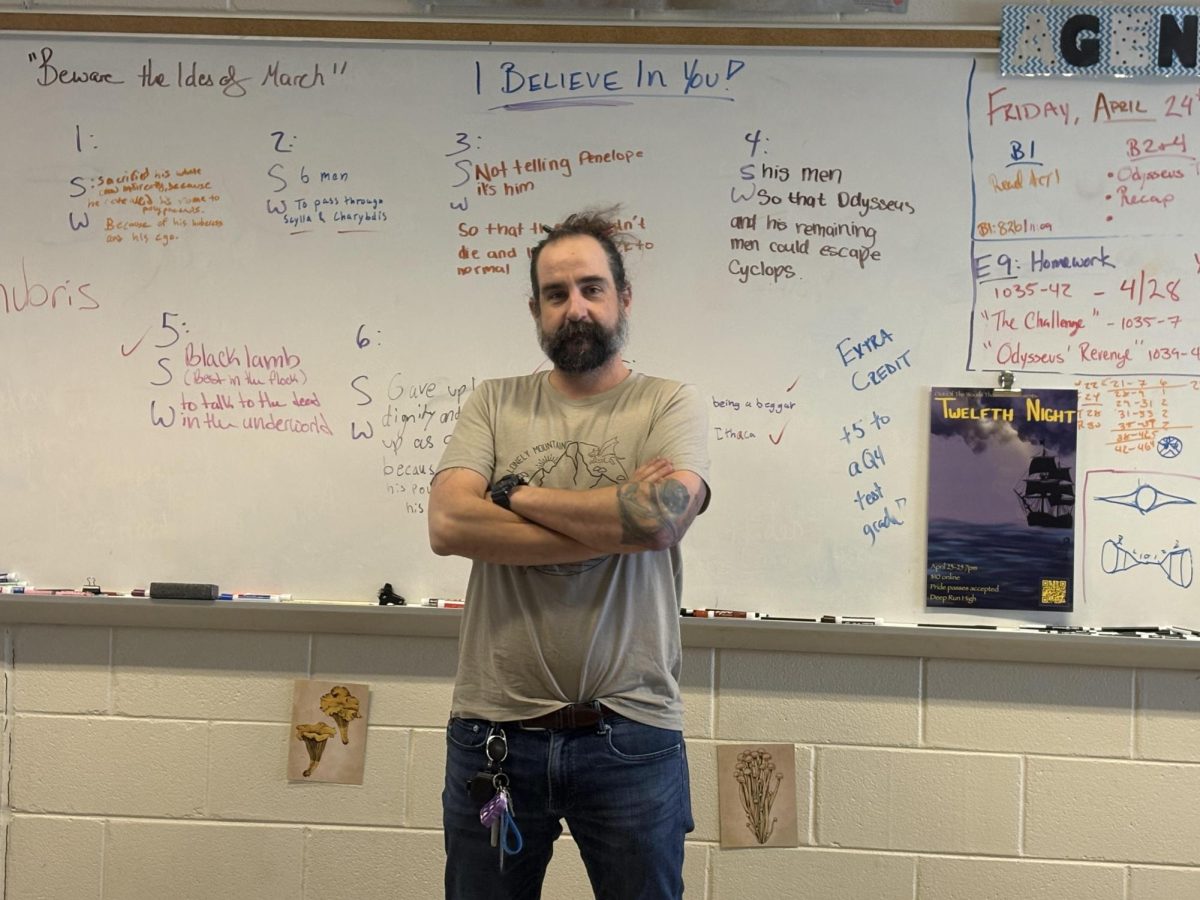
The instructor, English teacher Sarah Oliver, has been with the program for nine years. When it first started at Deep Run, few schools offered AP Research; over time, the class has gained popularity, growing to multiple sections and influencing other local schools to take on the program.
Junior Aarogya Bhattarai, a current AP Research student, chose to focus his project on the changes in students’ metacognitive awareness during creative tasks due to the influence of generative AI feedback. According to Bhattarai, he claims that he was “interested in generative AI” because of “its effects on students’ cognition and creativity”.
Junior Megan Luu conducted research on the effect of the language of background music on students’ reading comprehension performance. Luu’s inspiration stemmed from personal experiences as she enjoys listening to music while completing school work.
“I listen to music often in my classes,” Luu said.
Water quality in streams sparked the attention of junior Theo Luchs-Cohen. Like Luu, a personal connection inspired him to explore his chosen topic more in-depth.
“I love fishing and spending time in streams,” Luchs-Cohen said.
Junior Jishitha Ratakuntla chose to study whether there is a best flame retardant and which wood it is most compatible with. Her future career goals were an influence on her project choice.
“I want to become a civil engineer in the future, so I wanted to pick a topic that would relate to that career and something I would be interested in,” Ratakuntla said.
Other projects ran the gamut from gender impacts on sports injuries to the connection between writing poetry and character development. Looking at all these unique studies, it presents the idea that there is never a limit to research. From observing water quality to testing the performance of students’ work ethic from the music they listen to, and 58 other original research studies, it’s clear that there is a wide range of different interests and findings that showcase not just the students’ hard work, but also the vast creative freedom allowed during this year-long project.