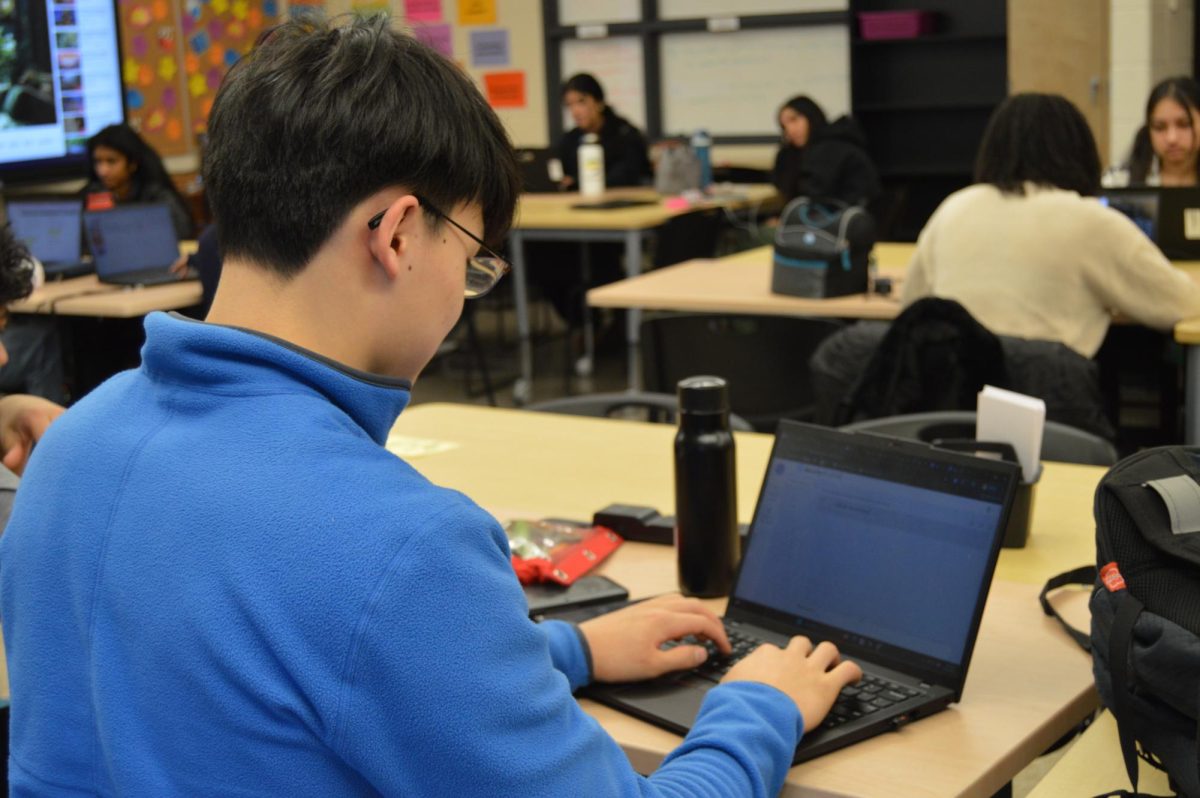
In April, Governor Spanberger signed SB108 into law, a bill introduced by a Fairfax senator which places stricter “bell-to-bell” limits on phone use in schools. The new legislation extends the phone ban put into place with former Governor Youngkin’s executive order; students will now also be required to keep phones out of sight during breaks between classes and lunch as well. This is meant to limit distractions and online conflicts and help students stay more focused and present during the school day.
As schools increase their own use of technology for academic purposes, this conflict has become more common for teachers, administrators, and students.
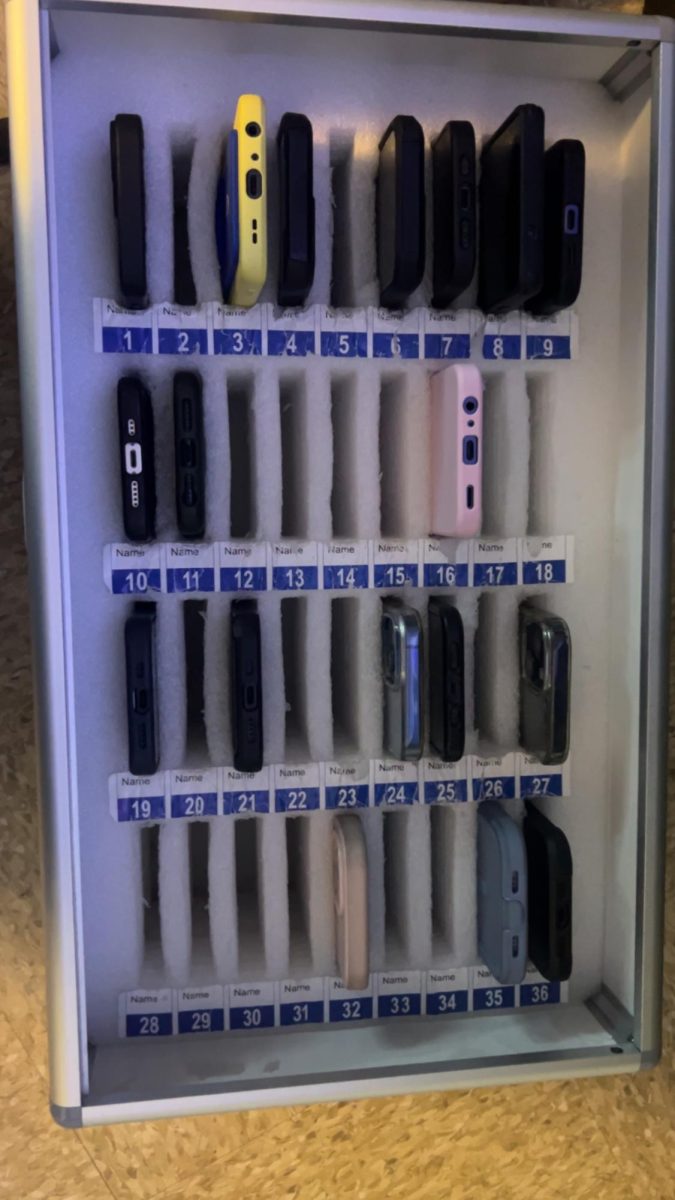
For many students, phones play an important part in their daily routine. They are used to communicate with family members, plan after school activities, and even check assignments or grades. Because of this, getting rid of phones altogether might feel like a major change. Deep Run currently uses a standard phone lockbox to hold students’ phones until the end of the block. Due to Virginia’s new SB108 law, it seems students would need to keep it in the box from the first bell to the last bell.
One main issue is students worrying about not being able to get to their parents quick enough if there was an emergency or important information. While the school does communicate quickly about emergency situations and even drills, some students feel this isn’t enough. Freshman Teagyn Moore complains that she’d rather her parents find out about an emergency from herself than hearing it from the school.
“I get the concern about too much phone use, but what if there is a school shooting and I need a way to contact my parents? Or what if I’m having an allergic reaction and my parents have to find out from the school instead of me?,” Moore said.
Although this is an understandable argument, it is also difficult to ignore the fact that phones have become distracting in a classroom setting. Over time, all of the different distractions available on the phones and other technological devices add up and make it a lot more difficult for students to understand the material being taught.
Many teachers have shown frustration with trying to get students’ attention when phones are constantly present. Teachers find it is becoming harder and harder to engage students enough to overpower the distraction of technology, which is built specifically to keep users’ attention. Even with the lockboxes in place, teachers have found that students use “burner” phones in the lockbox so that they still have access to their real phone. It’s also another thing that teachers have to manage instead of focusing on instruction.
While reducing distractions is important, it is also important to realize that technology is a permanent and essential part of modern life. Learning how to manage phone use better may be more beneficial long term than just removing all access during school hours.
Chris Clement, an administrator at Deep Run said they aren’t just making up rules as they go along. He explained that all the high school principals will meet and make one unified plan for everyone in the county to follow.
“We’re going to follow that plan to the letter, and then we are going to look at Deep Run and see if there’s anything special we need to protect,” Clement said.
Overall, the discussion about new phone policies shows a large problem that schools everywhere face today: finding the right balance between focusing in the classroom and adapting to a primarily technology based world.
As conversations about the new policies continue to happen, students will hopefully play an important role in how these policies are implemented. Whether it’s through stricter rules or teaching better responsibility, both have the same goal, which is to create an environment where students can succeed while still feeling prepared for life outside of school.