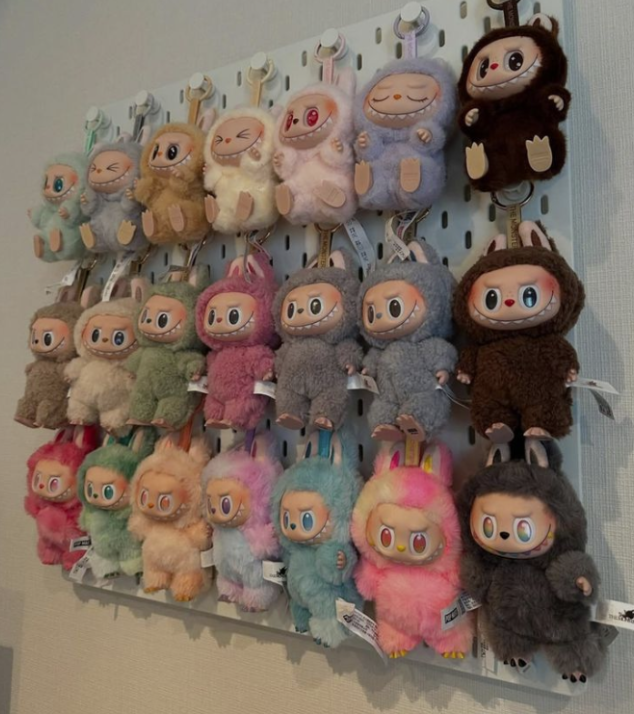
Do you really “need” that new Labubu or Owala collab? Probably not. Yet as consumerism continues to expand, the phrase “I need it” has become quite common.
Sure, everyone has moments where they splurge, and I’m all for that. If you want to buy that new viral item you saw on TikTok, nobody should stop you. Sure, all the mass production and microplastics used in the making of these hyped products are ruining the environment, but at least you get to be a bit trendy, right? But it raises the question of whether we are buying something because we truly do want it, or just because we’re being told to.
Often, the “hype” around a product gets spread quite quickly when mentioned on social media. Take Dubai Chocolate, for example, a chocolate bar recognized for its pistachio cream and kataifi dough inside the chocolate shell. Whether it’s the fact that it makes consumers feel bougie, or maybe it’s simply for the trend, it was taking over everywhere. It was flooding brands, TikTok “For You” pages, and snack aisles. This made it practically impossible to escape its existence once introduced. It was adopted by numerous food companies, like the Crumbl Dubai Chocolate brownie and the Starbucks Iced Dubai Chocolate Matcha. The chocolate can cost anywhere from $10 to $25 for just one bar of it, even though a regular chocolate bar costs around $2. Yet, if customers really wanted to add that Dubai touch, they could make their own pistachio and kataifi mix for way less than what it is retailing for. However, it’s clear that the appeal truly lies in the trend rather than the product itself.
Other food items, like the Grinch Meal from McDonald’s, have people overspending. The meal comes with the customer’s choice of either nuggets or a Big Mac, a dill pickle seasoning, and a pair of socks. It costs around $14 for this random combination of goodies, despite the same meal, minus the socks and seasoning, costing around $8. Now, sure, this might be just a $6 difference, but if buyers believe the pickle salt and cheap pair of socks are worth spending an extra $6, then I recommend going to the Dollar Store instead and getting triple the socks and seasoning for the same price.
Pop Mart’s Labubu has additionally gathered a substantial amount of attention online from consumers. These fuzzy monster plushies come in blind boxes, adding an element of surprise to see which color and rarity of Labubu you might unbox. According to Wired, Pop Mart has grossed around 670 million dollars in just the first half of 2025. With the recent rise in its popularity, it has everyone wanting a Labubu just so they can show it off online and to their friends, rather than actually wanting one for their own personal interest.
Regardless of the billions of wasted dollars, the environment is suffering due to the mass production taking place. Producing such a large quantity of any item is likely to cause significant harm to the ecosystem, especially when using non-biodegradable materials. It creates landfill waste, microplastic pollution, and heavily relies on the burning of fossil fuels. According to News Decoder, 80% of all toys in America are thrown away into landfills. People really are buying just about anything these days that looks even remotely interesting or fun without realizing the effects it can have on the Earth.
So next time you are out, and you see some viral collectible toy that probably costs 50 cents to make, yet it’s retailing for $50, pause before checking it out. Think back to all of the other things that went viral and fell off substantially after a few months, and ask yourself whether it’s really worth it.