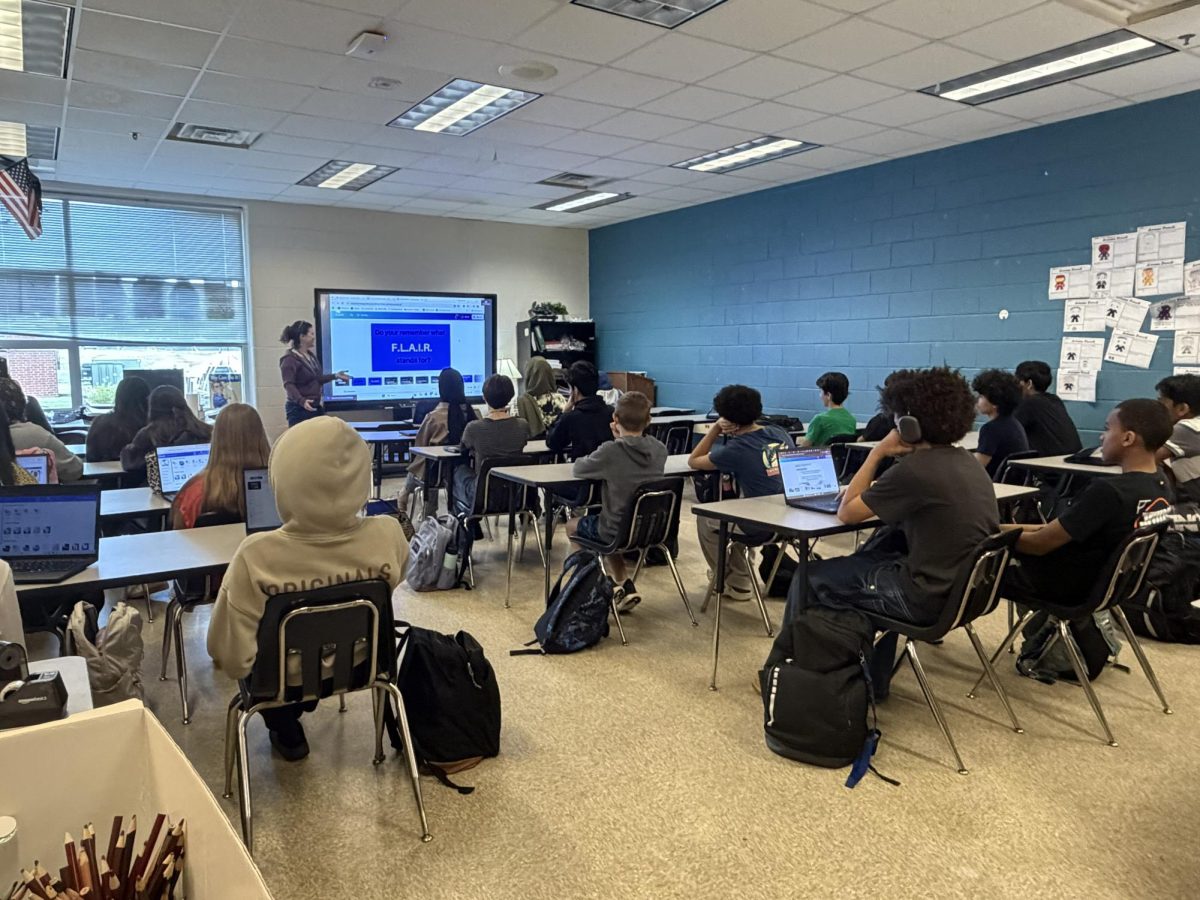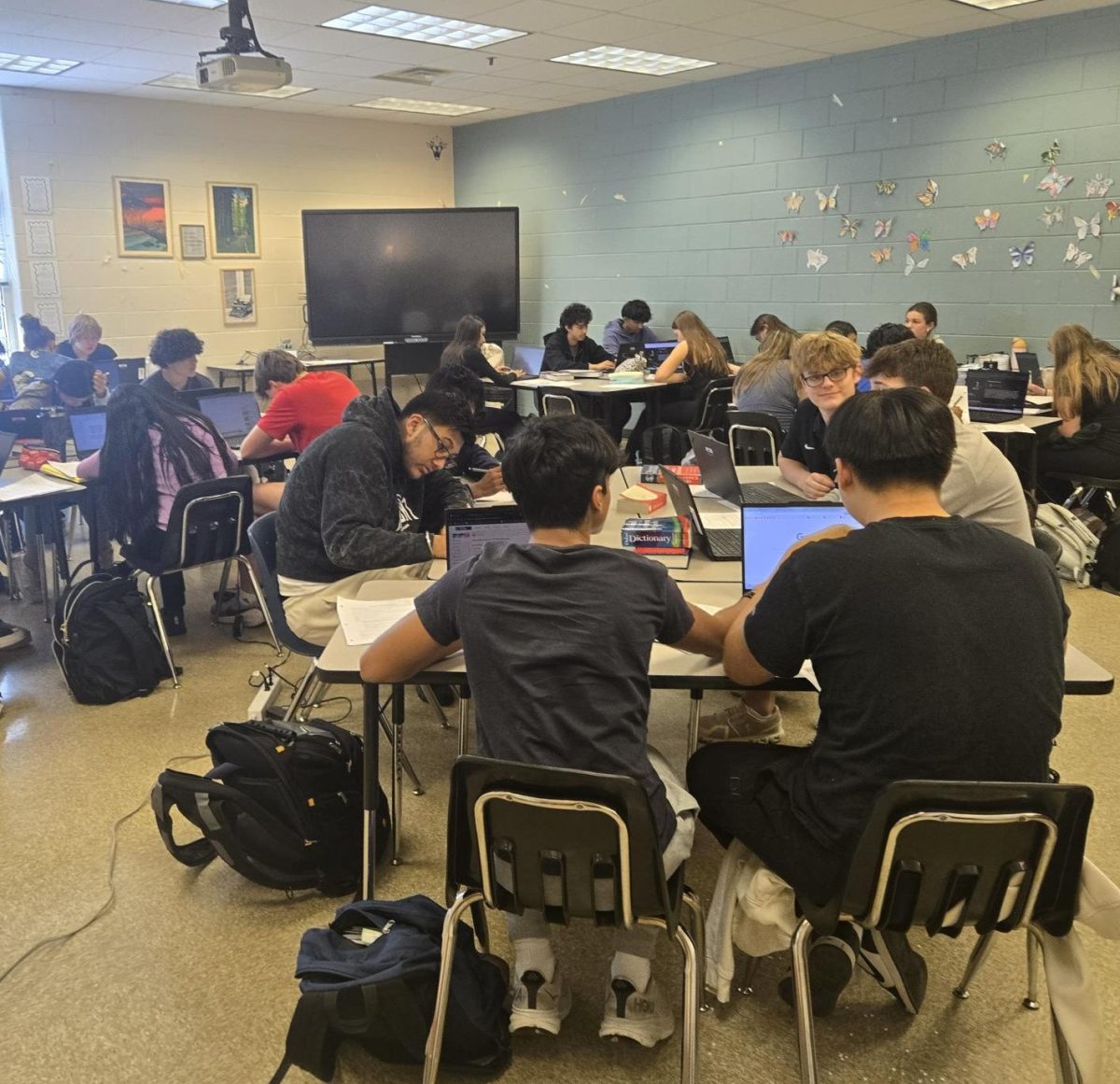
Picture this: you’ve been raising your hand for the last five minutes, but so have eight of your classmates, and the teacher can’t get around to all of you. Or maybe you find it difficult to move around the classroom since the sheer number of students clog the passageways between desks. These large classes are getting ridiculous, and it creates both overworked teachers and undervalued students.
According to US News and World Report, the student to teacher ratio at Deep Run is 19:1. However, it is rare to find a class with less than 25-30 students at this school.
With the number of students that one teacher has to teach reaching upwards of 150, teachers find it difficult to connect with every single student on a personal level despite their best efforts, and students can rarely put a name to all of their classmates. This can cause a lack of community in the classroom. It is rare to know all of one’s classmates, so cliques form easily and don’t encourage branching out or meeting new people. The days of socializing with fellow students are over, replaced by an indifference to the fate of classmates other than the raising or lowering of the grade curve.
There is also a lack of one-on-one instruction with this overpopulation. Students who need help often can’t get it right away because the teacher needs to provide the same services to every student under their instruction. There simply isn’t enough time for teachers to help their students individually until every single one understands the material satisfactorily. This leads to a reliance on tutors to supplement the lack of individual instruction, but because of the often expensive nature of tutors, these services are not accessible to all students in need. Deep Run is fortunate in its ability to offer regular teacher office hours during One Lunch, but students do not always take advantage.
The misleading US News and World Report information is caused by the Schedules and Structures to Support Instruction policy from HCPS. This policy dictates that the student to teacher ratio is determined by dividing the number of students enrolled at Deep Run by the number of regular classroom teachers, resource teachers and itinerant teachers, without considering how few students use resource teachers, or the number of teacher planning periods, or an imbalanced enrollment in different classes.
The student body at Deep Run is huge, and it only grows larger because of its excellent reputation. Families moving to Richmond will often gravitate specifically to the Deep Run zone so their child can attend the 13th best high school in Virginia. Although seemingly insignificant, this leads to a population growth that the school simply cannot support. A limited budget means limited teacher hirings, and a lack of space at Deep Run leads to mobile teachers without classrooms to teach students in. While this is not a situation unique to Deep Run, students should be aware of how it impacts them and what they might be able to do about it.
Although much of this is out of student control, diversifying your course schedule can help the situation. The low enrollment in certain electives means that registering for lesser known classes can lead to a much more enriching experience rather than signing up for super popular classes. If class size matters to you, avoid signing up for too many AP courses, which often have a surplus of students in every block. As the deadline approaches for class registration for the 26-27 school year, consider whether the courses you choose will mean an enjoyable learning experience.